2026-08-26 · Dave Ellison
AES Indiana Summer Bills and Overloaded HVAC Systems
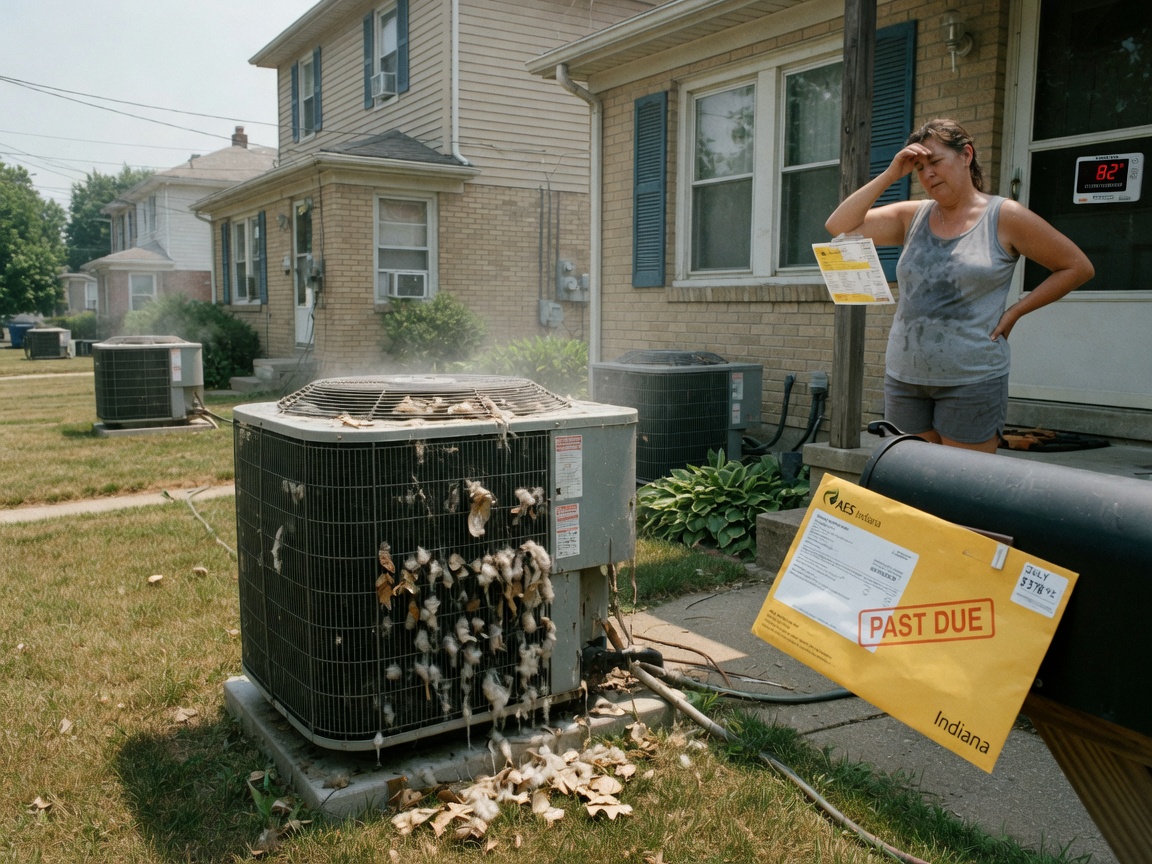
When AES Indiana reports cooling loads topping half of summer energy use and Fox 59 notes call spikes during 90-degree stretches, Noblesville homeowners see monthly bills rise because overloaded HVAC systems run longer cycles to offset humidity and pollen buildup on outdoor coils. The humid continental climate brings hot, sticky air that forces equipment to work harder than in drier regions, especially in neighborhoods like Downtown Noblesville and Stony Creek where older homes sit close to Forest Park and Conner Prairie.
How Humidity and Pollen Affect Coil Performance
Hamilton County humidity combined with spring pollen loads outdoor coils and reduces heat transfer efficiency. Once temperatures climb into the 90s, the system compensates by running extended cycles that pull more power from AES Indiana. Homeowners near Stony Creek Estates or Highlands at Stony Creek often notice the outdoor unit struggling after only a few days of sustained heat because the fins cannot shed heat fast enough. Regular rinsing of the coils with a garden hose on a mild day can restore airflow without special tools. In homes built before central air became standard, the added load shows up first on the electric meter during July and August.
Connection Between Overloaded Systems and AES Indiana Bills
When an HVAC unit runs past its design limits, it draws constant amperage instead of cycling on and off. AES Indiana data shared during recent heat events showed cooling already accounting for the majority of residential summer kilowatt-hours, so any extra runtime compounds the total. In Noblesville, residents in Federal Hill and near the Hamilton County Courthouse report the same pattern: a unit that once cooled in 12-minute bursts now stays on for 25 minutes or longer. The result appears on the next bill as higher usage during the exact weeks AES Indiana paused disconnections to help customers. Checking the thermostat setting against actual indoor temperature reveals whether the system is keeping up or simply running nonstop.
Practical Steps to Ease Strain This Season
Start by replacing the air filter every 30 days during peak summer so the blower does not fight restricted airflow. Set the thermostat to 78 degrees when away and 74–76 degrees when home; each degree lower increases runtime noticeably. Trim vegetation at least two feet from the outdoor condenser to maintain airflow, a step that matters for properties along Morse Reservoir or in Pebble Brook. Scheduling a pre-summer tune-up catches low refrigerant or failing capacitors before the next heat wave hits. These steps do not replace professional service but reduce the hours the unit must operate at full load.
When Professional Service Becomes Necessary
If indoor temperatures remain five degrees above the thermostat setting after four hours of continuous operation, the system is overloaded. AC repair addresses dirty coils, low charge, or failing components that force extended runtimes. For after-hours spikes during an AES Indiana heat event, emergency HVAC repair remains available. Homeowners in Carmel, Fishers, and Westfield who share the same grid often face identical conditions, yet local Noblesville service keeps travel time short. Affordable Heating & Cooling operates Monday through Saturday from 8am to 6pm and provides 24/7 emergency response for these exact situations. Why Noblesville AC units fail during Indiana heat waves explains the mechanical limits that appear once humidity and pollen combine with sustained high temperatures.